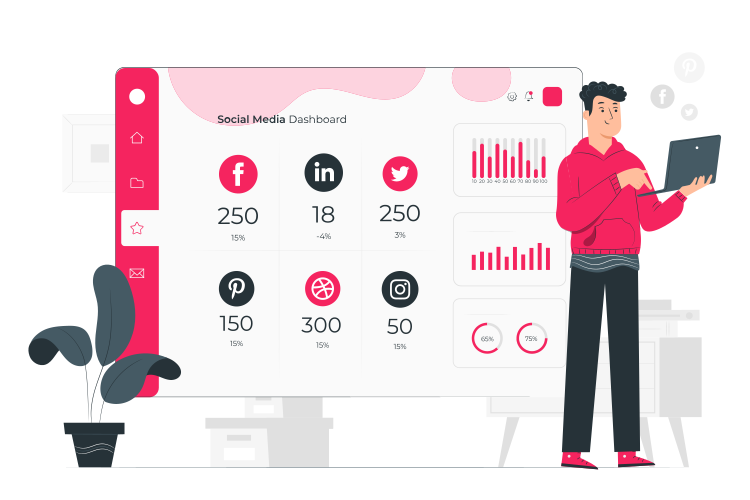

Social media can feel like a bit of a leap of faith. You post consistently, experiment with content, and hope the effort translates into something meaningful for your business. But hope is not a strategy, and without a clear method for measuring what is working, it is easy to invest significant time without ever knowing whether it is paying off.
Knowing how to measure social media success is one of the most valuable skills a UK business can develop, yet it is also one of the most commonly overlooked. Many businesses default to tracking likes or watching follower counts, and while these can form part of the picture, they rarely tell the whole story. Success on social media looks different depending on your goals, your industry, and the platforms you use. This guide walks you through the key approaches so you can start making smarter, data-informed decisions about your social strategy.
Start with your objectives
Before you can measure success, you need to define what success actually looks like for your business. This sounds obvious, but a surprising number of businesses jump straight into posting without establishing clear, measurable goals. Are you trying to drive traffic to your website? Build brand awareness in a new market? Generate leads for a product or service? Each of these goals requires a different approach to measurement.
A business focused on brand awareness will prioritise metrics like reach and impressions. A business trying to generate leads will care more about click-through rates and conversions. If community building is the priority, engagement metrics such as comments, shares, and replies will matter most. Taking the time to set clear objectives before you start measuring gives you a meaningful framework against which to judge your progress. Without this foundation, even the most sophisticated analytics tools will struggle to deliver actionable insights.
The difference between vanity metrics and meaningful data
One of the most common traps businesses fall into is placing too much weight on vanity metrics. Likes, follower counts, and impressions can all look impressive on a dashboard, but they do not necessarily translate into business results. A post with thousands of likes might generate zero enquiries, while a modest post seen by fifty people might drive a dozen sales if it reaches the right audience at the right moment.
Meaningful metrics are those that connect directly to your business objectives. Website referral traffic from social platforms shows whether your content is motivating people to act. Conversion tracking reveals whether social media is contributing to actual sales or enquiries. The distinction is not always clear cut, and some metrics such as reach genuinely are useful for awareness campaigns even without a direct commercial value. The key is knowing which metrics serve your specific goals and resisting the temptation to report on numbers simply because they look good.
Making use of platform analytics
Every major social media platform offers built-in analytics. Instagram Insights, Facebook Business Suite, LinkedIn Analytics, and X Analytics all provide detailed data on how your content is performing. These native tools are a solid starting point and are free to use. They allow you to identify which posts performed best, when your audience is most active, and how your account has grown over a given period.
For a more joined-up view across multiple platforms, third-party tools such as Hootsuite, Sprout Social, or Later offer consolidated dashboards that pull data from all your channels into one place. Google Analytics plays an equally important role, allowing you to track how much traffic your social channels are sending to your website and what those visitors do once they arrive. Regular engagement with these tools, rather than occasional checks, is what enables businesses to spot trends and act on them.
Setting benchmarks to track progress
Raw numbers only mean something when you have context. Knowing that a post received 200 impressions tells you very little unless you know whether that is better or worse than usual. Benchmarking means establishing a baseline for your typical performance and then tracking whether you are improving over time.
Start by reviewing the past three to six months of data and calculating averages for key metrics such as reach, engagement rate, and click-through rate. These figures become your benchmarks. From there, you can set targets and measure progress against them. Industry benchmarks, where available, can also provide useful context for how your performance compares to others in your sector. Treat them as a guide rather than a definitive verdict.
Connecting social activity to business outcomes
Ultimately, the most meaningful measure of social media success is the contribution it makes to your broader business goals. This means looking beyond platform analytics and connecting your activity to actual outcomes such as enquiries, purchases, sign-ups, or downloads. UTM parameters are a practical way to achieve this. By adding these tracking codes to the links you share on social media, you can see in Google Analytics exactly which posts are driving traffic and what visitors do when they arrive.
For businesses running paid social campaigns, the advertising platforms themselves offer robust conversion tracking. For organic content, attribution can be harder to pin down precisely, but even approximate data is far better than none. Over time, patterns will emerge that help you understand which content types, which platforms, and which posting approaches deliver the strongest results for your business.
Measuring social media success is not about obsessing over every data point. It is about choosing the right metrics for your goals, tracking them consistently, and using what you learn to make better decisions over time. Clarify your objectives, set your benchmarks, use the tools available to you, and always look for ways to connect your social activity to real business outcomes.
If managing measurement alongside the demands of running a business feels like too much, working with a professional social media management service can help you make sense of the data and concentrate your energy where it counts most.
What is the best way to measure social media ROI?
The best way to measure social media ROI is to track the business outcomes your activity generates, such as website visits, enquiries, or sales, and compare their value against the time and money you have invested. Using UTM parameters alongside Google Analytics and conversion tracking on paid platforms makes this process significantly more accurate and straightforward.
How long does it take to see results from social media?
Most businesses begin to see meaningful trends within three to six months of consistent, strategic posting, though significant commercial results can take longer to materialise. Social media growth is cumulative, and the more you learn from your data and refine your approach, the more your results tend to improve over time.
Can small businesses measure social media performance without expensive tools?
Absolutely. All major social media platforms offer free built-in analytics that provide a strong foundation for measurement. Google Analytics, also free, allows you to track how your social channels contribute to website traffic and conversions. Paid tools offer useful additional features, but they are not essential when you are starting out.
What should a monthly social media review include?
A monthly review should cover key metrics such as reach, engagement rate, and follower growth, alongside comparisons with the previous month and any targets you have set. Identifying your best and worst performing content, understanding why the difference exists, and using those insights to shape the month ahead is the core purpose of the exercise.
Is it worth tracking social media performance if I only post occasionally?
Yes, even infrequent posting benefits from measurement. Tracking performance helps you understand what resonates with your audience when you do post, and ensures you are making the most of every piece of content you create. It can also help you build a case for investing more regularly in social media as your business grows.
Ready to grow your social presence?
We handle your social media so you don't have to. From just £99 per month, we create content, schedule posts, and grow your audience, letting you focus on running your business.