Scroll through any social platform for long enough and you’ll start noticing it. A caption that’s a little too polished. A graphic that looks like it was designed by nobody in particular. A list of hashtags so generic they could belong to literally any business in the country. None of these things screams “AI” on their own, but together, they’re becoming one of the easiest ways to spot content that’s been generated rather than created.
This matters more than it might seem. Audiences are getting sharper at spotting AI content, and the data suggests that once they clock it, they trust the brand behind it noticeably less. If you’re using AI tools to fill your social calendar, or considering it, it’s worth knowing what your audience is actually picking up on.
The caption tells
AI-written captions tend to follow the same handful of patterns, regardless of the tool.
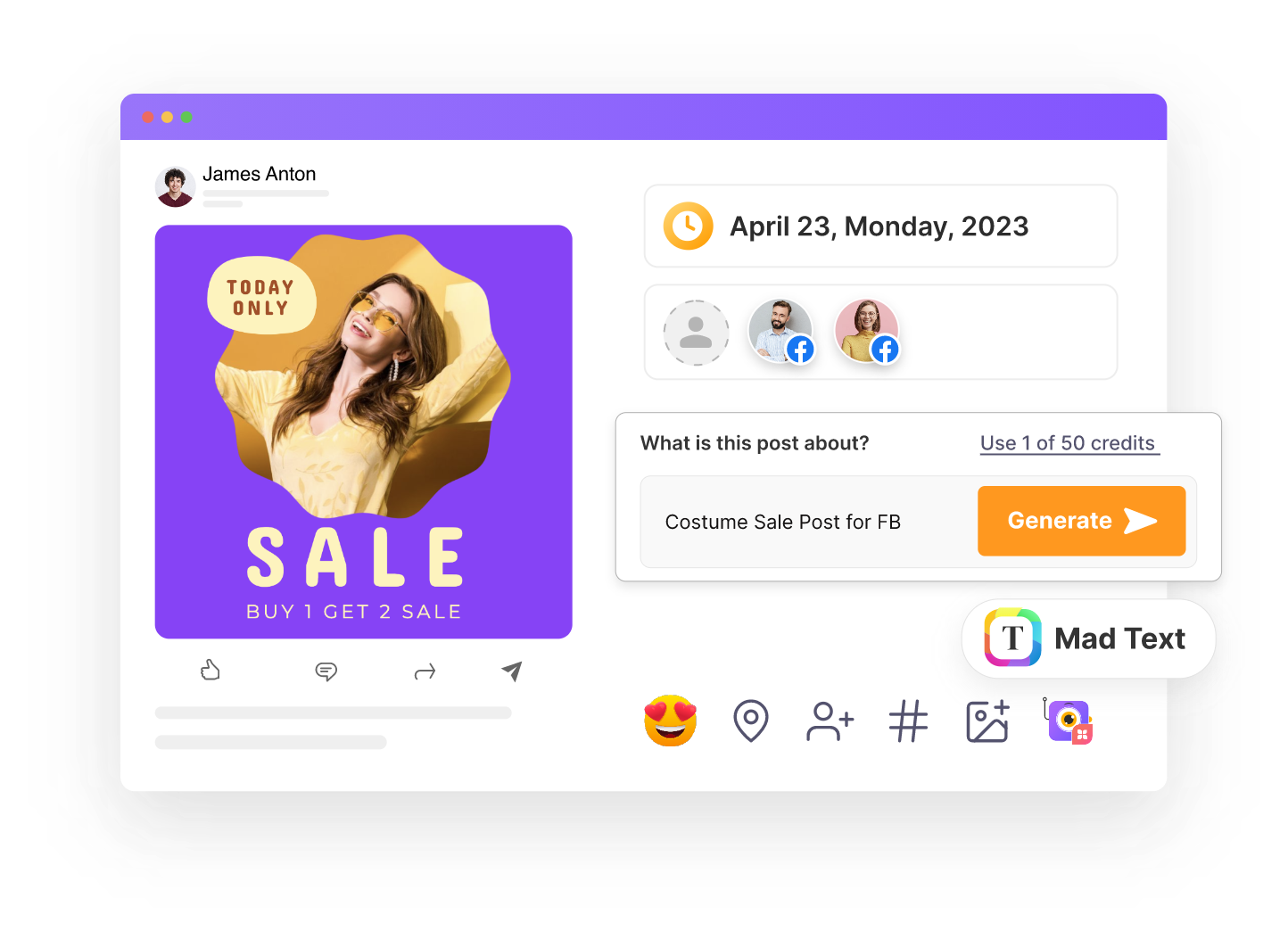
The most obvious is an overly polished, neutral tone that reads like it’s trying very hard not to offend anyone. There’s rarely a joke that lands wrong, a strong opinion, or a sentence that feels like it came from a specific person having a specific day. It’s smooth, but it’s also strangely flat.
Then there’s the vocabulary. Certain words crop up constantly in AI-generated copy: delve, leverage, tapestry, elevate, journey, unlock. On their own they’re harmless, but stack three of them into one caption and it starts to read like a corporate brochure rather than a small business chatting to its followers. Posts also tend to follow a rigid structure, hook, three points, neat conclusion, which works fine once, but becomes obvious fast when every post on a page follows the identical shape.
Repetitive sentence structure is another one to watch for. Real people write unevenly. We mix a short, punchy sentence with a longer, more rambling one. AI tends to even everything out, producing a steady, predictable rhythm that, after a few posts, starts to feel oddly mechanical even if you can’t quite put your finger on why.
The hashtag giveaway
Hashtags are one of the quickest tells, and one of the easiest mistakes to spot. AI tools often default to broad, generic tags, think #smallbusiness #marketing #socialmedia #grow, rather than anything specific to the brand, the post, or the local area. They’re technically relevant, but they don’t say anything about who you actually are or who you’re trying to reach.
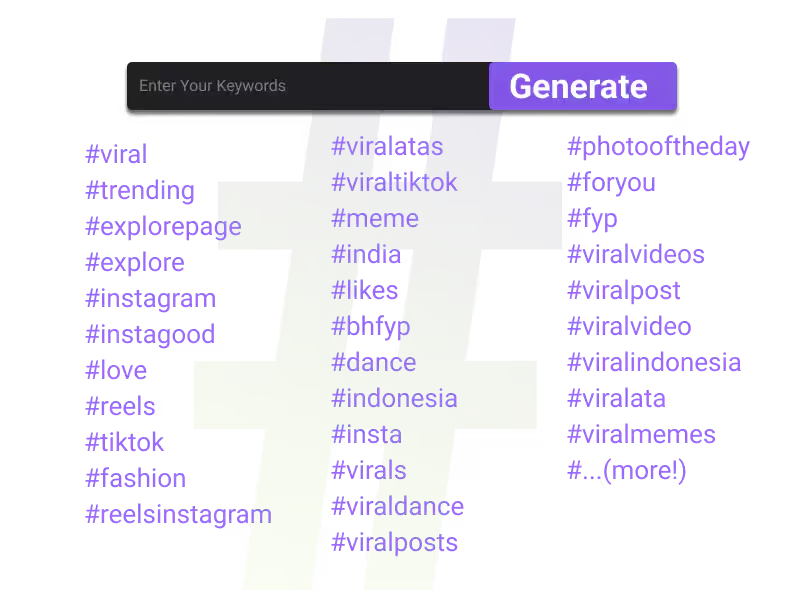
A human social media manager who knows your business will mix in the specific stuff: your town, your niche, an in-joke your regulars will recognise, a trending tag that’s actually relevant this week rather than evergreen filler. When every hashtag on a page reads like it’s been pulled from a “Top 50 Hashtags for Small Business” listicle, that’s usually a sign nobody’s thinking about the account individually.
The visual tells
Graphics give the game away just as often as captions do. AI-generated images have a particular look once you know what to search for: oddly smooth skin and surfaces, slightly too symmetrical compositions, and a kind of generic “stock photo, but stranger” quality. Hands are still a common weak point, as are details like text on signage, product labels, or anything with fine, specific detail.

Even when the image itself is polished, people-focused visuals are where it tends to fall apart. A graphic of an abstract texture or a mood shot can pass without anyone noticing. But a photo that’s supposed to feel candid, like a real customer, a real team member, a real moment in your shop, often reads as slightly “off” even to viewers who couldn’t explain exactly why. That gap matters most for small businesses, because so much of what makes local brands likeable is the sense that there are actual people behind them.
What the data says about trust
This isn’t just a feeling. There’s now a reasonable amount of research backing up how directly visible AI content affects brand trust.
A March 2026 Klaviyo and Datalily study of 8,000 consumers across the US, UK, and several European markets found that when people notice AI-generated content in brand marketing, they become roughly four times more likely to trust that brand less rather than more, with 31% saying their trust decreased against just 7% who said it increased. That’s not a small gap. It’s a strong signal that visible AI use is, for most brands, a trust cost rather than a trust win.
Other research backs this up from a different angle. One industry roundup of AI content statistics cites a figure from Bynder showing that 62% of consumers say they’re less likely to engage with AI content specifically on social media, while separate research from SmythOS found that 52% of people reduce their engagement with content once they identify it as AI-generated, even when the content itself hasn’t changed.
Even in video, a format many assume is harder to “spot,” Animoto’s 2026 State of Video Report found that 83% of consumers say they can identify AI-generated video content, and 36% say it lowers their trust in the brand using it. Tellingly, the same report found marketers largely agree on the fix: 95% say it’s essential that their own branding still shines through AI-assisted content, and 99% say their brand personality has to remain visible in whatever gets published.
The pattern across all of this research is consistent. People are not uniformly anti-AI, but they consistently disengage and lose trust the moment AI involvement becomes obvious and unmanaged. The risk isn’t using AI. It’s letting it run unsupervised until your content stops sounding like you.
Why this matters more for small businesses
Larger brands can sometimes get away with content that feels a bit generic, because their name recognition does some of the work for them. Small and local businesses don’t have that luxury. Your social media is often the only place a potential customer forms an impression of you before they buy, book, or walk through your door. If that impression feels mass-produced, you lose the exact thing that should set you apart from a big, faceless competitor: the sense that there’s a real business, run by real people, behind the page.
This is precisely why fully automated, AI-only social media tools tend to be a false economy. They might save time in the short term, but if your hashtags are generic, your captions all sound the same, and your graphics have that slightly uncanny AI sheen, you’re quietly training your audience to scroll past you.
How 99social keeps it human
At 99social, every post is created and reviewed by our team, based across the North of England. We use tools where they genuinely help, for research, for sparking ideas, for speeding up admin, but the captions, the hashtags, and the final decision on what goes out are always shaped by a person who actually understands your brand. That’s how we avoid the generic tells altogether: not by avoiding AI entirely, but by never letting it run the show unsupervised.
It’s also how we’ve built a track record of being trusted by over 600 businesses since 2017, with plans starting from just £99 per month. You get professional, on-brand social media management without the agency price tag, and without your followers ever wondering if anyone’s actually behind the page.
If you’d like social content that sounds like a real person wrote it, because it did, get in touch with 99social today.