If there is one metric that social media professionals consistently point to as a reliable indicator of content performance, it is engagement rate. Unlike raw follower counts or impression figures that can look impressive but tell you little about genuine audience interest, engagement rate cuts through the noise and shows you how actively your audience is responding to what you share.
Understanding engagement rate, knowing how to calculate it, and having a clear sense of what a good rate looks like for your business and sector can transform how you approach your social media strategy. This guide explains everything UK small business owners and marketers need to know about this important metric.
Defining engagement rate
Engagement rate is a measure of how much your audience interacts with your content relative to the number of people who see it or follow you. At its core, it shows you the proportion of people who did not just see your content but actively responded to it in some way. Those responses, collectively called engagements, typically include likes, comments, shares, saves, reactions, clicks, and in some cases video views or story interactions depending on the platform.
The metric is expressed as a percentage, which is what makes it so useful. A percentage figure allows you to compare the performance of different posts fairly, even when the underlying reach or follower numbers vary significantly. A small account with a high engagement rate is often far more valuable from a marketing perspective than a large account with a low one, because it signals that the audience is genuinely invested in the content.
How to calculate engagement rate
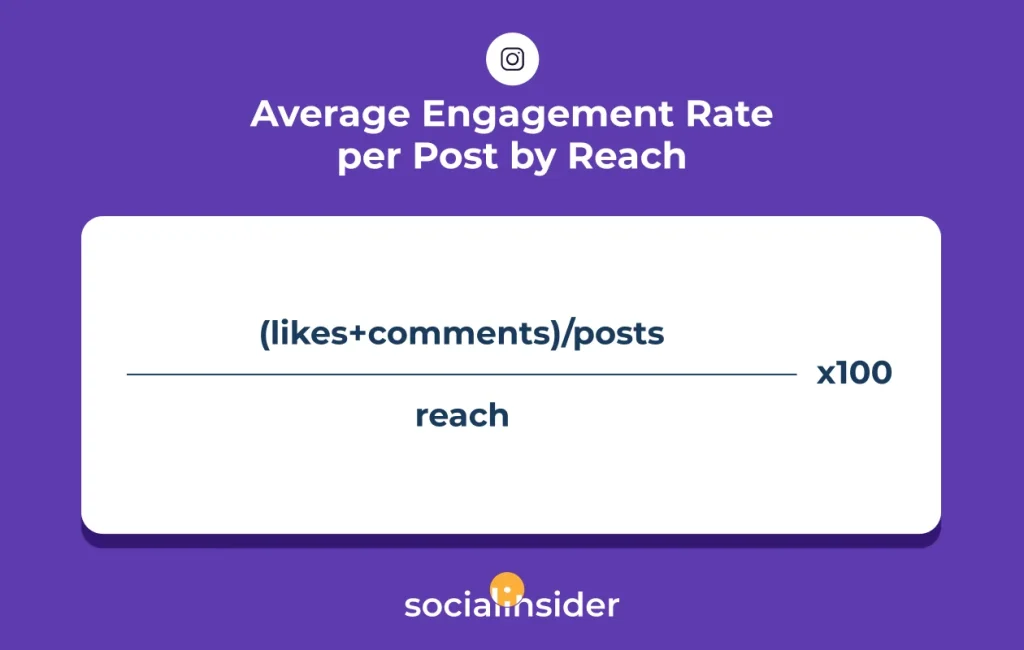
There are several ways to calculate engagement rate, and different platforms and tools may use slightly different formulas. The two most commonly used methods are engagement rate by reach and engagement rate by followers. Engagement rate by reach divides the total number of engagements on a post by the reach of that post, then multiplies by 100 to give a percentage. So if a post receives 150 engagements and reaches 3,000 people, the engagement rate by reach is 5%.
Engagement rate by followers divides total engagements by your total follower count rather than by the reach of the individual post. This method is useful for tracking your overall account performance over time and comparing it against industry benchmarks. Both approaches have their place, and using both in combination gives you a more rounded picture. Whichever formula you choose, the important thing is to apply it consistently so your data remains comparable across time.
What is a good engagement rate?
Benchmarks for engagement rate vary by platform, industry, and account size. On Instagram, an engagement rate of 1 to 3% is generally considered average, while 3 to 6% is considered good and anything above 6% is excellent. On LinkedIn, average engagement rates tend to be slightly lower, typically between 0.5 and 1%, because the platform has a more professional, less reactive user base. On TikTok, where algorithmic distribution is more aggressive, average engagement rates are considerably higher.
It is worth noting that accounts with smaller, more targeted followings tend to have higher engagement rates than accounts with very large audiences. This is partly because smaller accounts often have a more closely connected community, and partly because large follower counts frequently include inactive or disengaged users. Rather than chasing a universal benchmark, focus on improving your own rate over time and use industry averages as a rough reference point.
Why engagement rate matters more than follower count
Follower count is the metric most people fixate on when they first start using social media for business, but engagement rate is a much stronger indicator of how well your content is actually working. A business with 1,000 followers and a 6% engagement rate has 60 people actively responding to every post. A business with 10,000 followers and a 0.3% engagement rate has just 30. The smaller account, by this measure, is actually reaching more engaged people with each post.
From a commercial perspective, engaged followers are far more likely to become customers, advocates, and repeat buyers. They are the people who comment questions about your products, share your posts with friends, and remember your brand when they are ready to buy. Building an engaged audience, even if it is a modest one, is therefore a more effective long-term strategy than chasing follower numbers for their own sake.
How to improve your engagement rate
Improving engagement rate starts with understanding why your current content is or is not connecting with your audience. Look at your top performing posts and identify what they have in common. Is it the format, the topic, the tone, or the time of posting? Use those insights to inform more of your content going forward. Asking questions in your captions, encouraging people to tag someone, and creating content that prompts a specific reaction are all proven tactics for boosting engagement.
Consistency also plays a significant role. Audiences are more likely to engage with accounts that post regularly and reliably. Responding promptly to comments and messages signals to both your audience and the platform algorithm that your account is active and worth amplifying. Good social media management incorporates all of these factors into a planned, consistent approach that builds engagement over time.
Conclusion
Engagement rate is one of the clearest signals available for understanding how well your social media content is working. It moves the conversation beyond vanity metrics and tells you whether real people are genuinely connecting with what you share. Calculating it regularly, understanding what influences it, and using it to guide your content decisions will put you in a much stronger position than businesses that rely on follower counts alone.
Keep in mind that improving engagement rate is rarely the result of a single change. It is the product of consistently good content, an understanding of your audience, and a willingness to test, learn, and adjust your approach over time.
Looking to build a more engaged social media audience for your business? At 99social, we help UK businesses create content strategies that drive genuine engagement and lasting results. Get in touch today to find out how we can help.
Which engagements count towards engagement rate?
The engagements counted in the calculation vary slightly by platform but typically include likes, comments, shares, saves, reactions, and in some cases link clicks and video views. Most native platform analytics tools calculate engagement rate automatically using their own definition, so it is worth checking which interactions are included if you are comparing figures across different tools or platforms.
Does a high engagement rate mean my business is doing well on social media?
A high engagement rate is a positive sign that your content is resonating with your audience, but it is not the only measure of social media success. It should be considered alongside other metrics such as reach, website traffic, and conversions to give a full picture. A highly engaged audience that never visits your website or makes a purchase may indicate that your content is entertaining but not driving commercial action.
Why does my engagement rate fluctuate so much?
Engagement rate naturally varies from post to post depending on the topic, format, timing, and how broadly the platform distributes a particular piece of content. Seasonal factors, current events, and changes to platform algorithms can all cause fluctuations. Rather than focusing on individual post performance in isolation, look at trends across a rolling 30 or 90 day period to get a more reliable picture of your overall rate.
Should I compare my engagement rate to competitors?
Competitor benchmarking can be useful context, but it is important to compare like for like. Accounts in the same industry with a similar follower count and content type are the most relevant comparison. Public figures, influencers, or accounts with very different audience sizes will skew any comparison. Tools such as Phlanx or Sprout Social allow you to analyse competitor engagement rates if benchmarking is useful for your strategy.
Can buying followers affect my engagement rate?
Yes, and negatively. Purchased followers are typically inactive or bot accounts that will never engage with your content. Adding them to your follower count without a corresponding increase in genuine interactions will pull your engagement rate down significantly. Beyond the metrics impact, most platforms actively work to remove fake accounts, which means purchased follower counts often drop over time in any case.