
One of the most common social media mistakes businesses make is producing a single type of content repeatedly until their audience loses interest and their feed becomes predictable. A business that only ever posts promotional content will attract followers who quickly stop engaging once they realise every post is an advertisement. A business that only posts educational tips can start to feel dry and impersonal. Variety in content type is what keeps an audience engaged over the long term and signals that there is a real, multidimensional business behind the account.
The solution is a deliberate content mix: a planned rotation of different post types that collectively cover the key dimensions of your brand while giving the audience variety and giving the algorithm a range of content signals to work with. Understanding the main content categories and what each one achieves helps you build a mix that is both strategic and sustainable.
Educational content
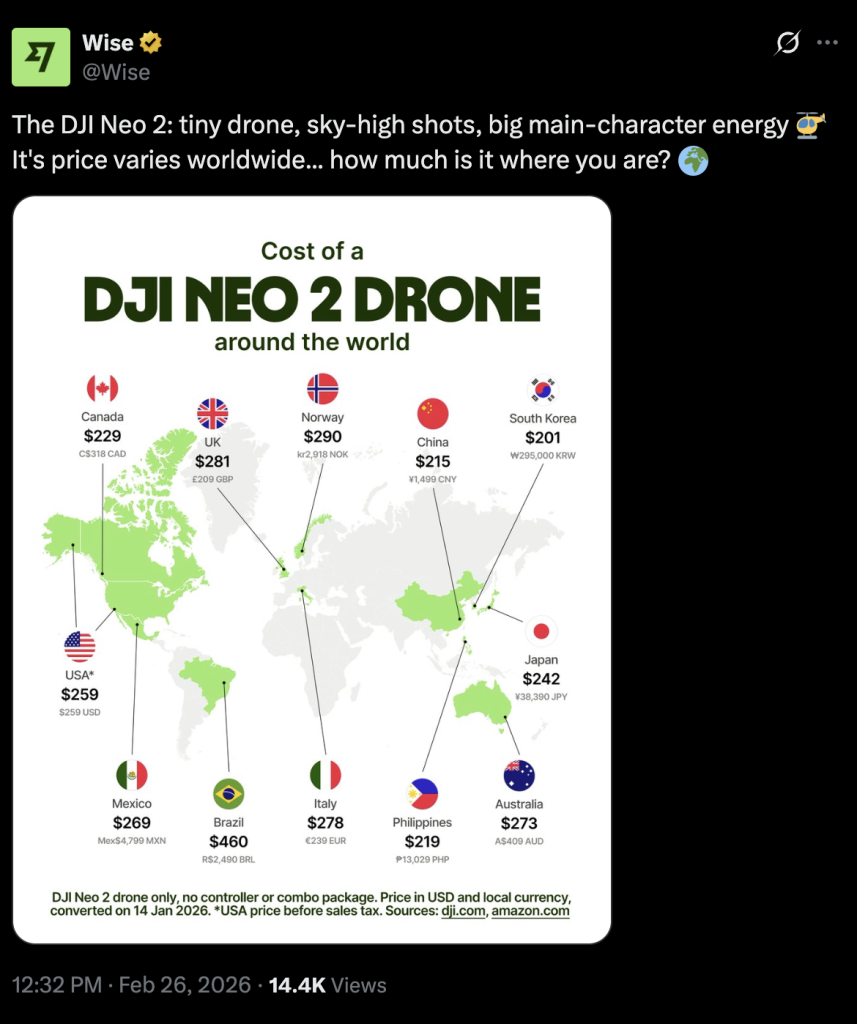
Educational content addresses the questions, problems, and knowledge gaps that your target audience has. It could take the form of a tip, a how-to explanation, a myth-busting post, an industry insight, or an answer to a frequently asked question. This type of content performs consistently well across platforms because it gives the audience a genuine reason to save, share, or follow, since they are getting something useful in exchange for their attention.
Educational content also positions your business as a trustworthy authority in your area of expertise. When a potential customer repeatedly finds your content useful and informative, they associate your brand with competence and credibility long before any commercial interaction takes place. This is one of the most powerful ways social media contributes to the sales process, and it operates largely invisibly compared to direct advertising.
Behind-the-scenes and team content
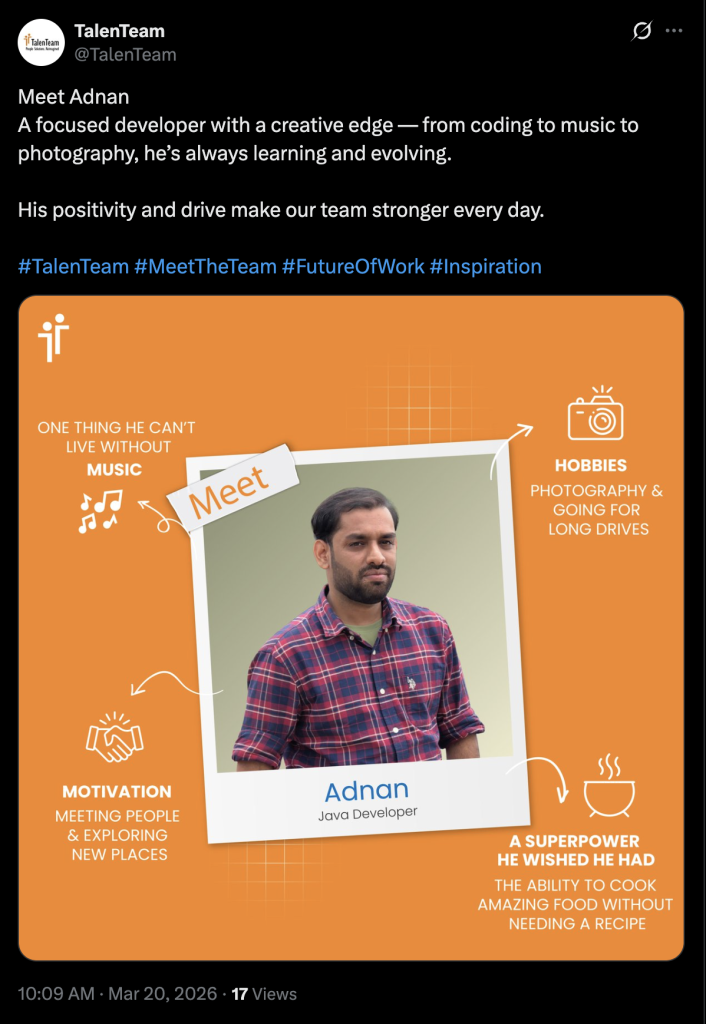
Behind-the-scenes content shows the human side of your business: the people, the processes, the workspace, the small moments that give your brand personality and make it feel like more than a logo and a product offering. This type of content builds the emotional connection between your brand and its audience that drives loyalty and word-of-mouth recommendation. Audiences are naturally curious about how things work and who the people behind the business are, and satisfying that curiosity creates goodwill that purely commercial content cannot.
Team content, introducing staff members, sharing team achievements, or reflecting on company culture, is particularly effective on platforms like LinkedIn and Instagram. It makes the business feel approachable and real, which is especially valuable for service businesses where the quality of the relationship with the people behind the service is central to the purchasing decision.
Social proof and testimonials
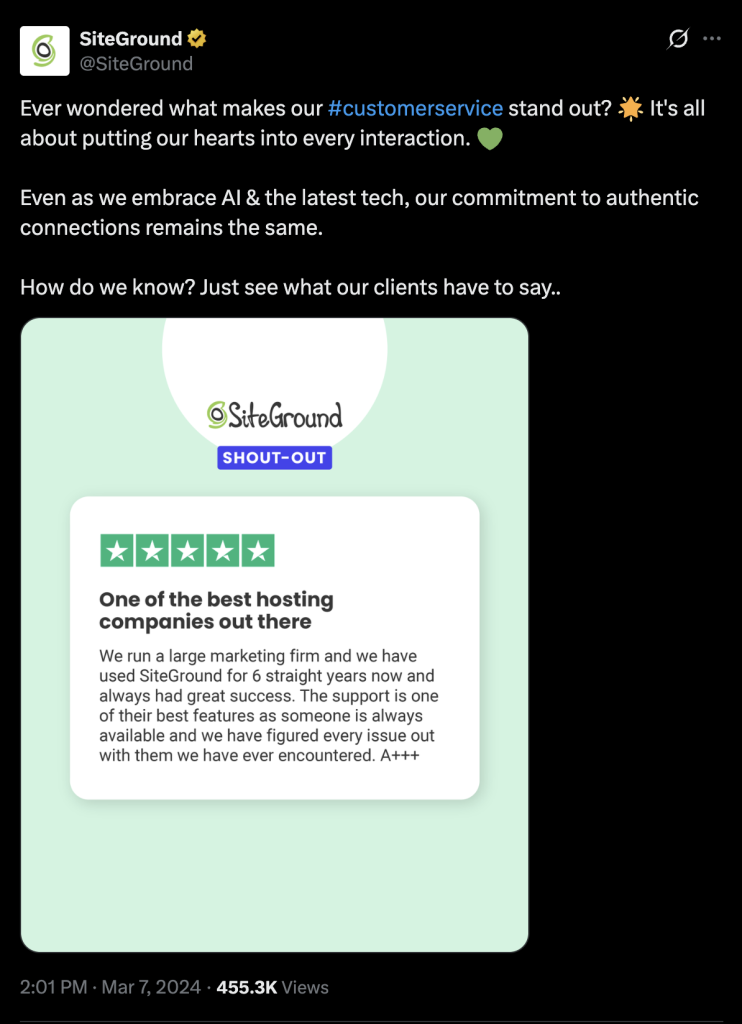
Posts that share customer reviews, testimonials, case study outcomes, or user-generated content serve the critical function of building trust with potential customers who are researching before they buy. Social proof addresses the fundamental question that any prospective customer has: do other people trust this business and get results from it? When the answer comes from a real customer rather than the business itself, it carries significantly more weight.
Rotating social proof content regularly, rather than posting it once and moving on, keeps these trust signals visible to the portion of your audience that is at the consideration stage of their decision-making. A testimonial seen three months after someone first followed your account may be the post that tips them from interested to ready to enquire.
Promotional content and CTAs
Promotional content, posts that directly promote a product, service, offer, or call to action, is a legitimate and necessary part of any business content mix. The key is proportion. A content mix that is primarily promotional will exhaust the audience's patience and reduce engagement, while one that includes promotional posts as a minority of the total output, roughly one in five or one in four posts, maintains the commercial focus without overwhelming the audience. Good social media management strikes this balance deliberately rather than accidentally, ensuring that promotional posts appear in the right context and with the right frequency to convert attention into action without eroding the trust built by the surrounding content.
Conclusion
A well-balanced content mix rotates between educational content, behind-the-scenes and team posts, social proof, and promotional material, alongside any content types specific to your industry or audience. This variety keeps the feed interesting, serves different audience needs at different stages of the customer journey, and gives the algorithm the engagement signals it needs from diverse content types to maintain strong distribution.
The exact proportions of each type should be guided by your goals and refined by your performance data, but the principle of deliberate variety is one that every business social media account benefits from building into its planning from the outset.
Want a content mix that keeps your audience engaged and your pipeline moving? 99social builds balanced content strategies for UK businesses that cover every stage of the customer journey. Get in touch to find out more.
How many different types of content should a business post?
Most businesses benefit from rotating between four to six content types, enough to provide variety without the planning becoming unmanageable. A practical starting mix for most businesses includes educational posts, behind-the-scenes content, customer testimonials or case studies, and occasional promotional posts. Adding personality-led content such as opinions or team moments rounds out the mix. The exact types can be refined based on what resonates with your specific audience.
How often should promotional posts appear in the content mix?
A widely recommended guideline is that promotional content should make up no more than twenty to twenty-five percent of your total output. Posting promotional content more frequently than this tends to reduce overall engagement because audiences associate the account with sales rather than value. Framing promotional posts in terms of the benefit to the customer rather than the features of the product or service also improves their performance significantly.
What is the best content type for getting engagement on social media?
Content that invites a response, whether a question, a relatable observation, or a piece of information surprising enough to prompt a comment, consistently generates the strongest engagement. Educational content that is immediately actionable and personal or opinion-led content that shares a genuine perspective also tend to outperform passive informational posts. The common thread is that high-engagement content gives the audience something to react to rather than simply something to absorb.
Should every post have a call to action?
Not necessarily. Including a call to action on every post can feel pushy and formulaic, and it reduces the effectiveness of calls to action when they do appear. Educational and personality-led posts often perform better without an explicit call to action, simply allowing the value of the content to do the work of building trust. Saving calls to action for posts where they are genuinely appropriate, such as promotional posts, testimonial posts, or posts linked to a specific campaign, makes them feel more natural and increases the likelihood that they will be acted upon.
Can the same content type work across all platforms?
The same content category, for example educational tips or customer testimonials, can work across platforms, but the format in which it is delivered needs to suit each platform's norms. An educational tip might be a short Reel on Instagram, a detailed carousel on LinkedIn, and a short paragraph with a graphic on Facebook. The underlying idea is the same, but the execution is tailored to what the audience on each platform expects and responds to.
Ready to grow your social presence?
We handle your social media so you don't have to. From just £99 per month, we create content, schedule posts, and grow your audience, letting you focus on running your business.