These are the 47 UK Instagram statistics that matter most for small businesses going into 2027. Every figure comes from published research or official platform data, with a link to the source and the date it was published, so you can check it and quote it.
Each stat has its own link (click the #) and a ready made citation. Journalists, students and marketers are welcome to use them. Please link back to this page.
The headlines
- 78% of UK online adults use Instagram every month, and 22.6 million use it daily.
- Half of Instagram's UK audience is 35 or over.
- More than 50% of time on Instagram is spent watching Reels.
- Carousels get the highest engagement for brands, at 0.55%.
- UK creator partnership spend is forecast to pass £1 billion in 2026.
- 67% of UK SMEs use Instagram for their business.
Who uses Instagram in the UK
Source: NapoleonCat data, 2026. Share of Instagram's UK ad audience by age.
of UK online adults visited Instagram in May 2025, behind only YouTube and Facebook.
What this means: Instagram reaches more than three in four online adults. For most consumer businesses it belongs in the core mix.
Source: Ofcom, Online Nation 2025, Dec 2025 #
UK adults use Instagram on an average day.
What this means: Daily use means a steady posting rhythm pays off. People will see you most days if you show up most days.
Source: Ofcom, Online Nation 2025, Dec 2025 #
a day is the average time UK adults spend on Instagram, with use skewing towards 18 to 34s.
What this means: Twenty minutes is plenty of scrolling. Posting regularly matters more than posting perfectly.
Source: Ofcom, Online Nation 2025, Dec 2025 #
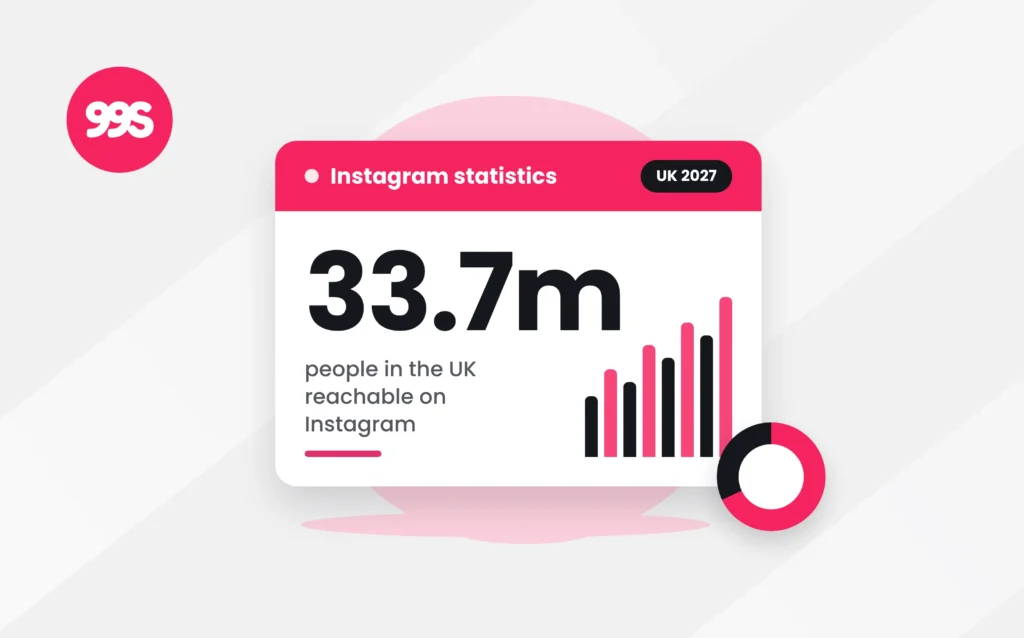
people in the UK can be reached with Instagram ads, 48.1% of the population and 60.4% of adults.
What this means: Instagram ads reach six in ten UK adults. Few channels give a local business that much reach for the money.
Source: DataReportal, Digital 2027: The United Kingdom, Nov 2026 #
change in Instagram's UK ad audience over the year to October 2026. DataReportal notes falls like this can reflect account clean ups rather than people leaving.
What this means: The audience is huge but no longer growing. Winning attention now depends on content quality, not just being there.
Source: DataReportal, Digital 2027: The United Kingdom, Nov 2026 #
of Instagram's UK ad audience is female and 45.2% male.
What this means: Instagram leans female, which suits beauty, fashion, home, wellness, food and gifts.
Source: DataReportal, Digital 2027: The United Kingdom, Nov 2026 #
of Instagram's UK audience is aged 35 or over.
What this means: Instagram is not just for young people. Half its UK users are 35 plus, so do not write off older customers.
Source: NapoleonCat data, reported by Sprout Social, Jun 2026 #
of Instagram's UK audience is aged 25 to 34, the single biggest age group.
What this means: Late twenties and early thirties are the heart of Instagram. They are setting up homes, weddings and families.
Source: NapoleonCat data, reported by Sprout Social, Jun 2026 #
people use Instagram every month worldwide, up from 2 billion in 2022.
What this means: Instagram is still growing globally, and Meta keeps investing in it. It is not going anywhere.
Source: Meta announcement, reported by ETCentric and Bloomberg, Sep 2025 #
Reels, carousels and what gets seen
Source: Socialinsider, 2026 Instagram Organic Benchmarks (global).
of the time people spend on Instagram goes on Reels, most of them recommended from accounts people do not follow.
What this means: Reels are how new people find you. A good Reel can reach people who have never heard of your business.
Source: Meta announcement, reported by ETCentric and Bloomberg, Sep 2025 #
growth in video time spent on Instagram in a year, according to Meta.
What this means: Video is where Instagram's growth is. If you only post photos, you are missing most of the attention.
Source: Meta Q3 2025 results, reported by PPC Land, Oct 2025 #
signals matter most for reach, according to Instagram's boss: watch time, likes per reach and sends per reach.
What this means: Make Reels people watch to the end and send to a friend. Shares in DMs count more than comments.
Source: Instagram announcements, compiled by Keywords Everywhere, 2026 #
average engagement rate for carousels in 2025, the highest of any post type for brands.
What this means: Carousels are great for tips, before and afters and step by step guides. Mix them in with your Reels.
Source: Socialinsider, 2026 Instagram Organic Benchmarks (35 million brand posts, global), Feb 2026 #
average engagement rate for Reels in 2025, up 4% and the only format that grew.
What this means: Reels get reach and hold their engagement. They are worth the extra effort.
Source: Socialinsider data, reported by Colorlib, 2026 #
average engagement rate for single image posts in 2025, down 18% on the year.
What this means: Single photos are fading. Turn your best photos into a carousel or a short Reel instead.
Source: Socialinsider data, reported by Colorlib, 2026 #
fall in brand engagement on Instagram in 2025.
What this means: Engagement is harder to earn for everyone. Do not panic if your numbers dip, and judge yourself against these benchmarks.
Source: Socialinsider, 2026 Instagram Organic Benchmarks (35 million brand posts, global), Feb 2026 #
more Reels posted by brands in 2025 than the year before.
What this means: Brands are moving to video. Doing Reels well is now the standard, not a bonus.
Source: Socialinsider, 2026 Instagram Organic Benchmarks (35 million brand posts, global), Feb 2026 #
follower growth for brand accounts with 1,000 to 5,000 followers in 2025, compared with 11.25% for accounts with 100,000 to 1 million.
What this means: Small accounts are growing twice as fast as big ones. Being small is not a disadvantage.
Source: Socialinsider data, reported by Colorlib, 2026 #
average Instagram engagement rate across brand posts in Q3 2026, with Reels at 0.48%.
What this means: Use this as a yardstick. If your posts beat 0.5%, you are doing better than most brands.
Source: Socialinsider, Instagram quarterly benchmarks (global), 2026 #
Shopping on Instagram
Source: Adyen, Retail Report 2024 (UK). Share of UK social media shoppers using each platform.
of UK consumers say they use social media to shop.
What this means: Almost a third of shoppers buy through social. Make it easy to go from a post to buying.
Source: Adyen, Retail Report 2025 (UK), May 2025 #
of UK social media shoppers bought through Instagram, behind Facebook Marketplace (50%) and TikTok Shop (45%).
What this means: Instagram is a shopping channel in its own right. Tag products and link straight to where people can buy.
Source: Adyen, Retail Report 2024 (UK), reported by Express and Star, Jul 2024 #
of consumers worldwide have bought something on Instagram in the past year.
What this means: This is a global figure, but it shows buying on Instagram is normal behaviour, not a novelty.
Source: EMARKETER, Global Shopper Survey 2025 (global), 2025 #
of Britons name Instagram as their main social shopping platform, behind Facebook (11%) and TikTok (7%).
What this means: Instagram is where people get inspired more than where they check out. Make sure your website does the closing.
Source: YouGov, Social media shopping trends among Britons, Mar 2025 #
of UK social shoppers have bought clothing and accessories, and 37% beauty and personal care.
What this means: Fashion and beauty lead, but home decor (26%) and food and drink (20%) also sell well.
Source: YouGov, Social media shopping trends among Britons, Mar 2025 #
of UK social shoppers are swayed by discounts and promotions, and 41% by reviews and ratings.
What this means: Offers and reviews sell more than celebrity. Share customer reviews in your Stories and Reels.
Source: YouGov, Social media shopping trends among Britons, Mar 2025 #
of UK social shoppers say influencer or celebrity endorsements influence what they buy.
What this means: Big names matter less than you think. Real customers and local creators often work better.
Source: YouGov, Social media shopping trends among Britons, Mar 2025 #
of UK social shoppers pay with digital wallets like Apple Pay, Google Pay or PayPal.
What this means: Make checkout quick on mobile. Wallet payments remove the friction of typing in card details.
Source: YouGov, Social media shopping trends among Britons, Mar 2025 #
Creators and influencers
Source: IAB UK and IRM, September 2026. Excludes paid amplification.
was spent on creator partnerships in the UK in 2025, up 20.1% and more than twice the growth of digital advertising overall.
What this means: Brands are moving money into creators fast. Working with the right ones can put you in front of new customers.
Source: IAB UK and IRM creator partnerships study, reported by Marketing Week, Sep 2026 #
is the forecast for UK creator partnership spend in 2026, the first time it will pass £1 billion.
What this means: Creator marketing is now a mainstream channel, not an experiment.
Source: IAB UK and IRM creator partnerships study, reported by Marketing Week, Sep 2026 #
of UK brands and agencies expect to increase influencer spending in the next 12 months, up from 81% a year earlier.
What this means: Competition for good creators is rising. Build relationships with local creators before your competitors do.
Source: Kolsquare, The Future of Influencer Marketing 2026/2027, reported by Marketing Week, Sep 2026 #
of UK brands say influencer marketing drives up to a quarter of their marketing revenue.
What this means: For many brands, creators are a real sales channel, not just awareness.
Source: Kolsquare, The Future of Influencer Marketing 2026/2027, reported by Marketing Week, Sep 2026 #
followers is the range most influencers UK brands work with fall into.
What this means: You do not need celebrities. Micro creators with engaged local followings are where most of the work happens.
Source: Kolsquare, The Future of Influencer Marketing 2026/2027, reported by Marketing Week, Sep 2026 #
of UK marketers see short form video as the biggest opportunity in influencer marketing.
What this means: Reels made by creators are what brands want most. Ask for usage rights so you can reuse them.
Source: Kolsquare, The Future of Influencer Marketing 2026/2027, reported by Marketing Week, Sep 2026 #
of UK consumers want influencers to make it clear when content is advertising.
What this means: Label paid posts clearly. People expect honesty, and the ASA does too.
Source: ASA, Influencer Marketing Disclosure Report, reported by Marketing Week, Feb 2026 #
want ad labels visible without having to tap 'more' on the caption.
What this means: Put 'Ad' or 'Paid partnership' at the start, not buried at the end.
Source: ASA, Influencer Marketing Disclosure Report, reported by Marketing Week, Feb 2026 #
of people could not identify influencer ads at all in the ASA's research.
What this means: Many people cannot spot an ad. That is why clear labelling matters, and why the ASA is watching.
Source: ASA, Influencer Marketing Disclosure Report, reported by Marketing Week, Feb 2026 #
average engagement on posts labelled #ad, almost the same as the 1.4% for posts with no label.
What this means: Labelling your ads properly does not hurt performance, so there is no reason to hide it.
Source: IMTB and HypeAuditor (500,000+ posts), reported by Marketing Week, Feb 2026 #
Small businesses on Instagram
How many UK small businesses use Instagram
Two in three UK small and medium businesses use Instagram, second only to Facebook (69%) and ahead of YouTube, WhatsApp and LinkedIn.
Source: iwoca, April 2025.
of UK SMEs use Instagram for their business, just behind Facebook at 69%.
What this means: Instagram and Facebook are the core pair for UK small businesses. Most of your competitors are on both.
Source: iwoca, SME social media research, Apr 2025 #
of UK small business owners and tradespeople post on Instagram, rising to 77% of 18 to 24 year olds but just 40% of over 55s.
What this means: Older owners are less likely to use Instagram. If that is you, it is a gap your younger competitors are filling.
Source: Markel Direct, How small businesses are using social media in the UK, Jul 2026 #
of small business owners and tradespeople photograph or film their own work for social media.
What this means: Your phone is your content studio. Real photos of real work beat stock images.
Source: Markel Direct, How small businesses are using social media in the UK, Jul 2026 #
of small businesses post finished projects, 34% before and afters and 30% process videos.
What this means: Before and afters and behind the scenes clips are perfect for Reels and carousels.
Source: Markel Direct, How small businesses are using social media in the UK, Jul 2026 #
No time for Reels, carousels and Stories?
We plan and create your Instagram content for you, from £99 a month plus VAT, with no long contract.
What is changing on Instagram
hashtags is the most Instagram now allows on a post or Reel, a limit introduced in December 2025.
What this means: Pick five specific hashtags. Keywords in your caption now do more of the work.
Source: Instagram announcements, compiled by Keywords Everywhere, 2026 #
is when public posts from professional accounts began rolling out to Google search by default.
What this means: Your Instagram posts can now be found on Google. Write captions that say what you do and where.
Source: Instagram announcements, compiled by Keywords Everywhere, 2026 #
is when 'Your Algorithm' reached the main feed, letting people see and edit the topics Instagram thinks they like.
What this means: People can now filter whole topics out. Being clear about your niche helps Instagram show you to the right people.
Source: Instagram announcements, compiled by Keywords Everywhere, 2026 #
is when Instagram extended its originality rules to photos and carousels. Accounts that keep reposting others' content without real edits stop being recommended.
What this means: Post your own content. Reposting other people's posts will not grow your account.
Source: Instagram announcements, compiled by Keywords Everywhere, 2026 #
content standard applied to UK teen accounts from October 2025, hiding mature content from teens' recommendations and search.
What this means: If you sell age restricted products, expect your content to reach fewer teens, which is no bad thing.
Source: Instagram announcements, compiled by Keywords Everywhere, 2026 #
is when the UK ban on social media for under 16s, including Instagram, is expected to start, in spring 2027 once Parliament passes the law.
What this means: If you market to teenagers, plan to reach their parents instead.
Source: UK Government, under 16s social media announcement, Jun 2026 #
Sources and how we chose these stats
We only include figures from original research, government announcements, regulators and named surveys, or platform data reported by trade press. Where a survey is not UK only, we say so.
Some figures come from Meta itself, and engagement benchmarks are based on brand accounts worldwide rather than the UK alone. Where that is the case, the source name says so.
- Ofcom, Online Nation 2025, Dec 2025
- DataReportal, Digital 2027: The United Kingdom, Nov 2026
- NapoleonCat data, reported by Sprout Social, Jun 2026
- Meta announcement, reported by ETCentric and Bloomberg, Sep 2025
- Meta Q3 2025 results, reported by PPC Land, Oct 2025
- Instagram announcements, compiled by Keywords Everywhere, 2026
- Socialinsider, 2026 Instagram Organic Benchmarks (35 million brand posts, global), Feb 2026
- Socialinsider data, reported by Colorlib, 2026
- Socialinsider, Instagram quarterly benchmarks (global), 2026
- Adyen, Retail Report 2025 (UK), May 2025
- Adyen, Retail Report 2024 (UK), reported by Express and Star, Jul 2024
- EMARKETER, Global Shopper Survey 2025 (global), 2025
- YouGov, Social media shopping trends among Britons, Mar 2025
- IAB UK and IRM creator partnerships study, reported by Marketing Week, Sep 2026
- Kolsquare, The Future of Influencer Marketing 2026/2027, reported by Marketing Week, Sep 2026
- ASA, Influencer Marketing Disclosure Report, reported by Marketing Week, Feb 2026
- IMTB and HypeAuditor (500,000+ posts), reported by Marketing Week, Feb 2026
- iwoca, SME social media research, Apr 2025
- Markel Direct, How small businesses are using social media in the UK, Jul 2026
- UK Government, under 16s social media announcement, Jun 2026
UK Instagram numbers vary by source. Ofcom measures how many UK online adults visited Instagram in a month. DataReportal's figures are advertising audience sizes, which are not the same as monthly active users.
Want help turning these numbers into Reels and posts that bring in customers? See what our plans include or sign up in about five minutes. Or see how our Instagram management works.
More UK statistics: UK social media statistics, UK TikTok statistics, UK Facebook statistics, UK LinkedIn statistics, UK local search statistics.
UK Instagram statistics FAQs
How many people use Instagram in the UK?
Ofcom found 78% of UK online adults visited Instagram in May 2025, with 22.6 million using it every day. DataReportal counts 33.7 million people in Instagram's UK ad audience.
How long do people in the UK spend on Instagram?
Ofcom found UK adults spend an average of 20 minutes a day on Instagram, with younger adults spending the most time.
What age group uses Instagram most in the UK?
25 to 34 year olds are the biggest group, at 30.5% of Instagram's UK audience. But half of UK users are 35 or over.
Do Reels or carousels get more engagement?
Socialinsider found carousels averaged 0.55% engagement for brands in 2025 and Reels 0.52%. Reels usually reach more people, while carousels get slightly more interaction per view.
How many hashtags should I use on Instagram?
No more than five. Instagram introduced a five hashtag limit in December 2025 and recommends a few specific hashtags over many generic ones.
Do small businesses use Instagram?
Yes. iwoca found 67% of UK SMEs use Instagram for their business, second only to Facebook at 69%.
Can I use these statistics?
Yes. Please quote the original source shown under each stat and link to this page. Each stat has its own link and a ready made citation.
How often is this page updated?
We update it at least once a year, after Ofcom and DataReportal publish their new UK reports.