These are the 56 UK LinkedIn statistics that matter most for small businesses going into 2027. Every figure comes from published research or official platform data, with a link to the source and the date it was published, so you can check it and quote it.
Each stat has its own link (click the #) and a ready made citation. Journalists, students and marketers are welcome to use them. Please link back to this page.
The headlines
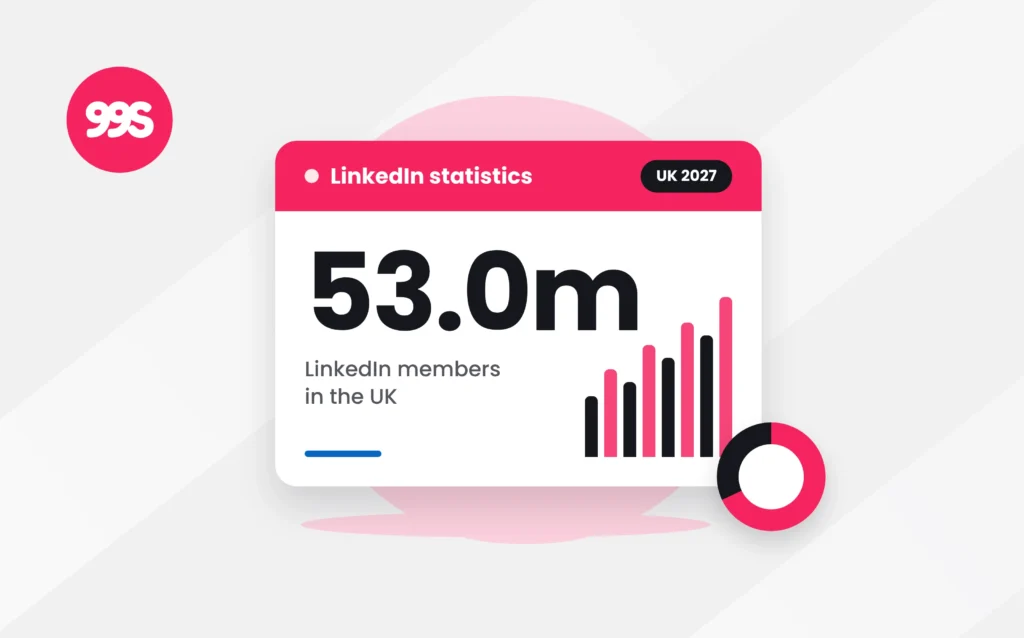
- 53.0 million people in the UK have a LinkedIn profile, up 10.4% in a year.
- But only 38% of UK online adults actually visit in a month, about 18.4 million.
- 52% of UK SMEs use LinkedIn for their business.
- 94% of B2B buyers use AI tools in their buying process.
- 59% of final decision makers dropped a supplier partly for poor or absent thought leadership.
- Hiring by UK micro businesses is up 44% on 2019, while overall hiring is down.
Who uses LinkedIn in the UK
Source: Ofcom, Online Nation 2025 (May 2025 data).
LinkedIn members in the UK, equal to 95.1% of adults. These are registered members, not monthly users.
What this means: Almost every professional in the UK has a LinkedIn profile, even if they rarely log in. Your buyers can be found there.
Source: DataReportal, Digital 2027: The United Kingdom, Nov 2026 #
growth in UK LinkedIn members in a year, adding 5 million. Over the same period Facebook's UK ad audience fell 1.8% and Instagram's fell 4.9%.
What this means: LinkedIn is growing while the big consumer platforms are flat or shrinking. It is worth more of your attention than it was.
Source: DataReportal, Digital 2027: The United Kingdom, Nov 2026 #
of LinkedIn's UK audience is male and 45.7% female.
What this means: LinkedIn leans slightly male, but nearly half the audience is women. Do not assume it only reaches men in suits.
Source: DataReportal, Digital 2027: The United Kingdom, Nov 2026 #
of UK online adults visited LinkedIn in May 2025, about 18.4 million people.
What this means: The real monthly audience is far smaller than the member count. Plan around 18 million active people, not 53 million profiles.
Source: Ofcom, Online Nation 2025, Dec 2025 #
UK adults visit LinkedIn on an average day.
What this means: A smaller daily crowd than Facebook or Instagram, but they are there to talk business.
Source: Ofcom, Online Nation 2025, Dec 2025 #
a day is the average time UK adult visitors spend on LinkedIn.
What this means: People check in briefly. Lead with the point in your first line, because there is no time for a slow build up.
Source: Ofcom, Online Nation 2025, Dec 2025 #
of the time UK adults spend on LinkedIn comes from men, one of the most male skewed platforms in Ofcom's top ten.
What this means: If you sell to women, combine LinkedIn with Instagram or Facebook rather than relying on it alone.
Source: Ofcom, Online Nation 2025, Dec 2025 #
of UK LinkedIn members who work are employed by business to business companies.
What this means: Half the audience works in B2B. If you sell to other businesses, this is your platform.
Source: YouGov, Who are the Brits who use LinkedIn?, Aug 2023 #
of UK LinkedIn members who work are in micro businesses (21%) or small businesses (14%).
What this means: LinkedIn is not just for corporates. Plenty of small business owners and staff are there too.
Source: YouGov, Who are the Brits who use LinkedIn?, Aug 2023 #
of UK LinkedIn members are millennials (37%) or Gen X (34%). Gen Z make up just 9%.
What this means: LinkedIn's audience is mostly people aged roughly 30 to 60, the age range that holds most buying power at work.
Source: YouGov, Who are the Brits who use LinkedIn?, Aug 2023 #
How people use LinkedIn
of UK LinkedIn members use it to apply for jobs, and 48% to build their network.
What this means: People come for careers and contacts. Content that helps them do their job better fits right in.
Source: YouGov, Who are the Brits who use LinkedIn?, Aug 2023 #
use LinkedIn to follow interesting people or industry experts.
What this means: Nearly a third are actively looking for experts to follow. Show what you know.
Source: YouGov, Who are the Brits who use LinkedIn?, Aug 2023 #
of UK LinkedIn members never post, and only 5% post more than once a day.
What this means: Very few people post, so it does not take much to become a familiar face in your niche.
Source: YouGov, Who are the Brits who use LinkedIn?, Aug 2023 #
of UK members check LinkedIn more than once a day, and 25% at least once a week.
What this means: Your audience checks in less often than on other apps. Post consistently so you are there when they look.
Source: YouGov, Who are the Brits who use LinkedIn?, Aug 2023 #
of UK LinkedIn members access it on a mobile phone.
What this means: Most people read LinkedIn on their phone. Keep posts short, use line breaks and make videos work without sound.
Source: YouGov, Who are the Brits who use LinkedIn?, Aug 2023 #
of UK members use LinkedIn to keep up to date with brands.
What this means: Few people follow company pages for fun. Posts from a real person usually travel further than posts from a logo.
Source: YouGov, Who are the Brits who use LinkedIn?, Aug 2023 #
of Britons say they are LinkedIn members, the fifth most popular platform. Facebook was 70% and Instagram 46%.
What this means: Fewer people say they use LinkedIn than the member count suggests. Many profiles are dormant.
Source: YouGov, Who are the Brits who use LinkedIn?, Aug 2023 #
Small businesses on LinkedIn
How many UK small businesses use LinkedIn
Just over half of UK small and medium businesses use LinkedIn, behind Facebook (69%) and Instagram (67%) but ahead of X and TikTok.
Source: iwoca, April 2025.
of UK SMEs use LinkedIn for their business, behind Facebook (69%), Instagram (67%) and YouTube (63%).
What this means: About half of your competitors are on LinkedIn. Being active there is still a way to stand out.
Source: iwoca, SME social media research, Apr 2025 #
rise in UK LinkedIn members adding 'founder' to their profile between July 2024 and July 2025.
What this means: More people are starting businesses, and they announce it on LinkedIn. It is where new firms find their first customers.
Source: LinkedIn Economic Graph, Work Change Special Report: How Small Business Can Win in 2026, Dec 2025 #
of British SMEs use AI in some form.
What this means: Your competitors are using AI to save time. Use it for drafts, but keep your own voice and experience in every post.
Source: LinkedIn, Work Change Special Report: How Small Business Can Win in 2026 (UK edition), reported by UKTN, Dec 2025 #
of UK SMEs say trusted input from their community helps them make decisions more quickly.
What this means: Small business owners buy on recommendations. Being known and trusted in your network shortens the sale.
Source: LinkedIn, Work Change Special Report: How Small Business Can Win in 2026 (UK edition), reported by UKTN, Dec 2025 #
of UK professionals say building human networks is more vital than ever.
What this means: Relationships matter more as AI spreads. LinkedIn is the easiest place to keep in touch with past clients.
Source: LinkedIn, Work Change Special Report: How Small Business Can Win in 2026 (UK edition), reported by UKTN, Dec 2025 #
of UK SMEs agree people skills are even more important in the age of AI.
What this means: Show the people behind your business. Faces and opinions are harder to copy than polished copy.
Source: LinkedIn, Work Change Special Report: How Small Business Can Win in 2026 (UK edition), reported by UKTN, Dec 2025 #
growth in AI skills at UK firms with 11 to 50 employees, compared with 15% at large companies.
What this means: Small firms are learning faster than big ones. Share what you are learning, because it shows you are ahead.
Source: LinkedIn, Work Change Special Report: How Small Business Can Win in 2026 (UK edition), reported by UKTN, Dec 2025 #
of small business marketing decision makers say reaching B2B audiences is one of the reasons they use LinkedIn.
What this means: This is a US survey, but the reason is the same in the UK. LinkedIn is where business buyers are.
Source: LinkedIn and Ipsos, 2026 small business study (US small businesses), 2026 #
How B2B buyers decide
B2B buyers using AI to research
Nearly all B2B buyers now use AI tools like ChatGPT during their buying process. Buying groups average around 10 people, and many decide who to shortlist before they talk to anyone.
Source: LinkedIn Indie Summit data, June 2026.
of B2B buyers use AI tools like ChatGPT in their buying process.
What this means: Buyers ask AI who to shortlist. Posting clear, useful expertise on LinkedIn gives AI tools something to find and quote.
Source: LinkedIn Indie Summit data, reported by PPC Land, Jun 2026 #
of B2B deals are lost to indecision rather than to a competitor.
What this means: Your biggest rival is often doing nothing. Content that answers doubts and shows proof helps buyers commit.
Source: LinkedIn Indie Summit data, reported by PPC Land, Jun 2026 #
people is the average size of a B2B buying group.
What this means: You are rarely selling to one person. Posts that colleagues can forward to each other do a lot of quiet work.
Source: LinkedIn Indie Summit data, reported by PPC Land, Jun 2026 #
is the average length of a B2B buyer journey.
What this means: B2B buying is slow. Staying visible for months is what keeps you in the running.
Source: Dreamdata, LinkedIn Ads Benchmarks Report 2026 (global), reported by PPC Land, Mar 2026 #
of contracts are won by companies already on the buyer's first list, according to 6sense research cited in the report.
What this means: Most deals are decided before the buyer gets in touch. Be known before they start looking.
Source: Edelman and LinkedIn, 2026 B2B Thought Leadership Impact Report (7 countries including the UK), reported by PPC Land, Nov 2026 #
of B2B buyers who use creators rely on their input at the final stage to confirm recommendations.
What this means: Independent voices matter right up to the decision. Testimonials and partnerships with respected people help close.
Source: LinkedIn, 2026 Global B2B Marketing Outlook by YouGov (5 countries including the UK), Mar 2026 #
Thought leadership and trust
Share saying they find each voice credible 'a lot' or 'a great deal'. Source: Edelman and LinkedIn, 2026.
of final B2B decision makers say poor or absent thought leadership contributed to a vendor being dropped from consideration.
What this means: Saying nothing on LinkedIn has a cost. A quiet profile can lose you the shortlist.
Source: Edelman and LinkedIn, 2026 B2B Thought Leadership Impact Report (7 countries including the UK), reported by PPC Land, Nov 2026 #
of final decision makers spend four or more hours a week reading or watching thought leadership.
What this means: Buyers are reading. A useful post a week is enough to be part of that.
Source: Edelman and LinkedIn, 2026 B2B Thought Leadership Impact Report (7 countries including the UK), reported by PPC Land, Nov 2026 #
say high quality thought leadership makes a company seem a more viable long term partner.
What this means: Sharing what you know makes a small business look bigger and safer to hire.
Source: Edelman and LinkedIn, 2026 B2B Thought Leadership Impact Report (7 countries including the UK), reported by PPC Land, Nov 2026 #
say a vendor's thought leadership influenced a lot whether it made their first consideration list.
What this means: Posts get you on the list. That is where most deals are won.
Source: Edelman and LinkedIn, 2026 B2B Thought Leadership Impact Report (7 countries including the UK), reported by PPC Land, Nov 2026 #
say content that shows a clear understanding of their challenges does most to increase their trust.
What this means: Write about your customers' problems, not your products. Understanding beats a sales pitch.
Source: Edelman and LinkedIn, 2026 B2B Thought Leadership Impact Report (7 countries including the UK), reported by PPC Land, Nov 2026 #
of B2B decision makers used AI to summarise thought leadership while evaluating vendors.
What this means: Your posts are being read by AI as well as people. Clear, specific points survive the summary.
Source: Edelman and LinkedIn, 2026 B2B Thought Leadership Impact Report (7 countries including the UK), reported by PPC Land, Nov 2026 #
say thought leadership is becoming more valuable as AI becomes a common source of answers.
What this means: Original experience is what AI cannot make up. Real stories from your work are your edge.
Source: Edelman and LinkedIn, 2026 B2B Thought Leadership Impact Report (7 countries including the UK), reported by PPC Land, Nov 2026 #
of decision makers who shared thought leadership did it through private channels like email, DMs and meetings.
What this means: Most sharing is invisible. A post with few likes can still be forwarded round a buying group.
Source: Edelman and LinkedIn, 2026 B2B Thought Leadership Impact Report (7 countries including the UK), reported by PPC Land, Nov 2026 #
say a trusted outside voice sharing a company's content increases its credibility.
What this means: Ask happy clients and partners to share or comment on your posts. Their voice carries more weight than yours.
Source: Edelman and LinkedIn, 2026 B2B Thought Leadership Impact Report (7 countries including the UK), reported by PPC Land, Nov 2026 #
say good thought leadership matters even more for existing suppliers than for new ones.
What this means: Keep posting after you win the work. It reminds clients they chose well and opens the door to more.
Source: Edelman and LinkedIn, 2026 B2B Thought Leadership Impact Report (7 countries including the UK), reported by PPC Land, Nov 2026 #
Know you should post on LinkedIn but never get round to it?
We write and schedule your LinkedIn posts for you, from £99 a month plus VAT, with no long contract.
Content, video and advertising
LinkedIn's share of B2B ad budgets
LinkedIn takes 41% of B2B paid media budgets, with a reported 121% return on ad spend. Costs are high, at around $9.39 a click.
Sources: Dreamdata, March 2026; Metadata, September 2026.
growth in video viewing on LinkedIn, reaching 154 billion views in 2024.
What this means: Video is growing fast on LinkedIn. A simple talking head clip filmed on your phone counts.
Source: LinkedIn Creative Labs, reported by Teleprompter.com, Mar 2026 #
more shares for video posts than other types of content on LinkedIn.
What this means: Video gets passed around. A short clip explaining one idea can travel well beyond your own network.
Source: LinkedIn Creative Labs, reported by Teleprompter.com, Mar 2026 #
quarters in a row of double digit growth in video uploads, according to LinkedIn.
What this means: More people are posting video, but it is still early. Start now while it stands out.
Source: LinkedIn data, reported by Hootsuite, 2026 #
of B2B marketing leaders think video shortens sales cycles compared with other formats.
What this means: Video helps buyers decide faster. Explain your process or answer common questions on camera.
Source: LinkedIn, 2026 Global B2B Marketing Outlook by YouGov (5 countries including the UK), Mar 2026 #
of B2B marketers who work with creators say influencer campaigns are key to measurable return.
What this means: B2B influencers are real. Partnering with a respected voice in your industry can open doors.
Source: LinkedIn, 2026 Global B2B Marketing Outlook by YouGov (5 countries including the UK), Mar 2026 #
more views for verified LinkedIn Pages than unverified ones, according to LinkedIn.
What this means: Verifying your company page is free and quick. It is an easy win.
Source: LinkedIn data, reported by Hootsuite, 2026 #
of B2B paid media budgets go on LinkedIn ads.
What this means: B2B advertisers put more money into LinkedIn than anywhere else. Competition for attention is high.
Source: Dreamdata, LinkedIn Ads Benchmarks Report 2026 (global), reported by PPC Land, Mar 2026 #
average return on ad spend from LinkedIn ads, up from 113% the year before.
What this means: LinkedIn ads can pay back, but buying cycles are long. Judge them over months, not weeks.
Source: Dreamdata, LinkedIn Ads Benchmarks Report 2026 (global), reported by PPC Land, Mar 2026 #
average cost per click on LinkedIn ads in 2025, with a cost per lead of $202.
What this means: LinkedIn ads are expensive. Build organic content first, then use ads to boost the posts that already work.
Source: Metadata, 2026 B2B Paid Media Benchmark (138 advertisers), reported by Digital Applied, Sep 2026 #
of UK B2B marketers have to justify their marketing spend to senior leaders every month.
What this means: Measure what matters: enquiries and conversations, not just likes.
Source: LinkedIn, B2B ROI Impact study (250 UK marketers), reported by IT Brief UK, Feb 2025 #
LinkedIn and hiring
rise in hiring by UK micro businesses with 1 to 10 employees compared with 2019.
What this means: The smallest firms are hiring while bigger ones hold back. LinkedIn is where candidates will check you out.
Source: LinkedIn Economic Graph, EU and UK labour market data, reported by PPC Land, Jun 2026 #
lower UK hiring in January 2026 than in January 2019.
What this means: Hiring is tight overall, so good candidates have more choice. An active company page helps you look like a good place to work.
Source: LinkedIn Economic Graph UK hiring data, reported by The Irish News, Jun 2026 #
fall in UK hiring year on year, according to LinkedIn's data.
What this means: With fewer jobs about, people are watching LinkedIn closely. Your posts reach job seekers as well as buyers.
Source: LinkedIn Economic Graph UK hiring data, reported by The Irish News, Jun 2026 #
AI related roles have been created in the UK since 2023.
What this means: AI skills are in demand. If you have them, show them on your profile and in your posts.
Source: LinkedIn Economic Graph UK hiring data, reported by The Irish News, Jun 2026 #
drop in London hiring compared with before the pandemic, the biggest of any UK area.
What this means: Regional businesses may find it easier to compete for talent than London firms.
Source: LinkedIn Economic Graph UK hiring data, reported by The Irish News, Jun 2026 #
Sources and how we chose these stats
We only include figures from original research, government announcements, regulators and named surveys, or platform data reported by trade press. Where a survey is not UK only, we say so.
Much of the research on LinkedIn is published or paid for by LinkedIn itself, and a lot of it covers several countries rather than the UK alone. Where that is the case, the source name says so. Treat it as useful but not independent.
- DataReportal, Digital 2027: The United Kingdom, Nov 2026
- Ofcom, Online Nation 2025, Dec 2025
- YouGov, Who are the Brits who use LinkedIn?, Aug 2023
- iwoca, SME social media research, Apr 2025
- LinkedIn Economic Graph, Work Change Special Report: How Small Business Can Win in 2026, Dec 2025
- LinkedIn, Work Change Special Report: How Small Business Can Win in 2026 (UK edition), reported by UKTN, Dec 2025
- LinkedIn and Ipsos, 2026 small business study (US small businesses), 2026
- LinkedIn Indie Summit data, reported by PPC Land, Jun 2026
- Dreamdata, LinkedIn Ads Benchmarks Report 2026 (global), reported by PPC Land, Mar 2026
- Edelman and LinkedIn, 2026 B2B Thought Leadership Impact Report (7 countries including the UK), reported by PPC Land, Nov 2026
- LinkedIn, 2026 Global B2B Marketing Outlook by YouGov (5 countries including the UK), Mar 2026
- LinkedIn Creative Labs, reported by Teleprompter.com, Mar 2026
- LinkedIn data, reported by Hootsuite, 2026
- Metadata, 2026 B2B Paid Media Benchmark (138 advertisers), reported by Digital Applied, Sep 2026
- LinkedIn, B2B ROI Impact study (250 UK marketers), reported by IT Brief UK, Feb 2025
- LinkedIn Economic Graph, EU and UK labour market data, reported by PPC Land, Jun 2026
- LinkedIn Economic Graph UK hiring data, reported by The Irish News, Jun 2026
UK LinkedIn numbers vary a lot by source. DataReportal counts registered members, which includes dormant profiles. Ofcom measures how many UK online adults actually visited LinkedIn in a month. YouGov's figures come from a 2023 survey of the people who say they use it.
Want help turning these numbers into LinkedIn posts that bring in enquiries? See what our plans include or sign up in about five minutes. Or see how our LinkedIn management works.
More UK statistics: UK social media statistics, UK TikTok statistics, UK Facebook statistics, UK Instagram statistics, UK local search statistics.
UK LinkedIn statistics FAQs
How many people use LinkedIn in the UK?
LinkedIn has 53.0 million registered members in the UK, according to DataReportal's Digital 2027 report. Far fewer use it each month: Ofcom found 38% of UK online adults, about 18.4 million people, visited LinkedIn in May 2025.
Is LinkedIn growing in the UK?
Yes. DataReportal found UK LinkedIn membership grew 10.4% in a year, adding 5 million members, while Facebook and Instagram's UK ad audiences fell.
How long do people spend on LinkedIn each day?
Ofcom found UK adult visitors spend an average of 2 minutes a day on LinkedIn, far less than YouTube, Facebook or TikTok.
How many small businesses use LinkedIn?
iwoca found 52% of UK SMEs use LinkedIn for their business, behind Facebook (69%), Instagram (67%) and YouTube (63%).
Is LinkedIn worth it for small businesses?
For businesses that sell to other businesses, usually yes. Half of UK LinkedIn members work for B2B companies, and Edelman and LinkedIn found 59% of final decision makers have dropped a supplier partly because of poor or absent thought leadership.
How much do LinkedIn ads cost?
Metadata's 2026 benchmark found an average cost per click of $9.39 and a cost per lead of $202 across 138 B2B advertisers. LinkedIn ads are generally more expensive than Facebook or Instagram ads.
Can I use these statistics?
Yes. Please quote the original source shown under each stat and link to this page. Each stat has its own link and a ready made citation.
How often is this page updated?
We update it at least once a year, after DataReportal and Ofcom publish their new UK reports.